Sleiman!

24 May

Just now, Saturday afternoon, I was watching the live streaming of the Pope’s visit to the Jordan River. After going to the river to bless himself, Francis went into the Latin (Roman Catholic, that is) church to meet with youth, refugees and sick. All of a sudden I saw someone I knew. Last June I went to Jordan for the ordination of my friend, Sleiman. There he was, standing over the Pope’s translator, instructing him about something. Sleiman!

Sleiman 01

Father Sleiman had been appointed the Director of Youth for Jordan, so it is no surprise that he was there, but it sure surprised me to see him, so close to the action and so involved in the action.

Here he has moved over next to the Pope. He seemed to be a master of ceremonies, of sorts. I must tell him that I saw him at one point twiddle his thumbs on those properly folded hands.

Sleiman 02

After an accident survivor told her story, volunteers were preparing to lift her entire wheelchair to get her up on the stage to greet the Holy Father. Francis would have none of that. He sprung out of his chair, with a motion that said, “I am coming down to her.” My buddy Sleiman accompanies him, with that classic, killer smile on his face.

Sleiman 03

When it came time for Francis to bless the people with the water of the Jordan, look who is holding the clay pot of river, baptismal water – Sleiman!

Sleiman 04

And whose arm does the Pope grab when he needs balance on his way down the steps. Sleiman’s arm! Notice the look on Sleiman’s face, “You’re okay, Francis. You got me right here by you.”

Sleiman!

swaddled in a kaffiyeh

24 May

A local Nativity scene for the Papal Mass

artwork of Bethlehem for teh Pope's visit

BETHLEHEM – A work of art of 14 meters long by 6 meters wide. Nothing is too big or too good to welcome the Holy Father. Created ​​by a Palestinian artist, the figurative art piece, full of symbols, will be positioned as a backdrop behind the altar for the Papal Mass. A nativity scene reinterpreted with many local elements. 

The stable mentioned in the Gospel is represented by a tent, a symbol of all the many refugees from the region who, like Christ, are reduced to a miserable condition. It is also symbolic of the Incarnation of God who came “pitching his tent among us” (John 1:14). 

The shepherds are not the only figures. The three popes who visited the Holy Land, Paul VI, John Paul II and Benedict XVI are there to worship the Child, followed by Doves of Peace. Pope Francis, who will preside over the Mass in front of the art work, is indirectly represented by his patron saint and namesake, Francis of Assisi, friend of the poor, but also the protector of the Holy Places. 

Two religious sisters are also shown on the right, each side of St. Francis: the Carmelite Sister Mariam of Bethlehem, and Sister Marie-Alphonsine Ghattas, founder of the Sisters of the Rosary (the first Palestinian congregation) who was born in Jerusalem but spent most of her life in Bethlehem. They are two locals of the nineteenth century beatified in recent years. 

Saint Joseph is wearing a black and white kaffiyeh, local traditional headdress that has become a Palestinian emblem. This is also used to swaddle the Child Jesus in his manger. 

In the background, the city of Bethlehem and the hills of the Judean desert. 

Rich in symbols, intended as such by the artist, a Palestinian native of Bethlehem, Robert Jakaman, who studied art in Italy. 

by Myriam Ambroselli, Latin Patriarchate Jerusalem website, posted on May 20, 2014

an orphan priest

23 May

10374012_721483974582289_7605973770070388651_n

When I make pilgrimage to the Holy Land in June, I will take this photo with me, and will try to remember to pull it out and look at it at any pilgrimage site at which Mary is remembered or at any personal time that I think of Mary.

With this photo I will carry one of me and my mother, Isabelle, standing together at the ambo at St. Andrew, on what occasion I do not remember.

In a recent talk to seminarians, Pope Francis urged them to seek the help of the Virgin Mary if they feel spiritually troubled.

“First of all go to the Mantle of Mary and wait until there is a bit of calm. Some of you will tell me…in this time of so many modern goods – psychiatry, psychology – in this time of turbulence, I think it would be better to see a psychiatrist to get help. But – do not dismiss this – but first go to your Mother, because a priest who forgets the Virgin Mary, especially in times of turbulence, is missing something. He is an orphan priest, the one who forgets his Mother.”

At the time of my mother’s death in 2006, it dawned on me that I was an orphan. I have never forgotten that – and I have never forgotten her. I still miss her at times, times when I least expect it.

A Mexican nun told me at the time of my mother’s death that I now have two mothers in heaven. She really meant it. Honestly, I still do not feel it.

I will take the photos with me, the one above and this one:

OLYMPUS DIGITAL CAMERA

even though a minority presence

22 May

“a very important ingredient for peace and harmony”

+ + + +

+ + + +

“to demonstrate the shared concern of Christians around the world for the life of Christians and Christian places in the Holy Land”

12 to 11 to 3 to 0

8 May

In the heat of June the pilgrim-teachers whom I will accompany to the Holy Land will want to walk where Jesus walked and to see what Jesus saw.

There are some ancient steps that Jesus would have walked twice on what we call “Holy Thursday,” once when he went down from the Upper Room on his way to Gethsemane, and once when he was taken from Gethsemane back up to the House of Caiaphas. Twice that night he would have walked through the Kidron Valley where he would passed some tombs, once with eleven of his disciples and once with none of them.

If  the weather, the schedule and the authorities permit, the pilgrim-teachers and I will pray the rosary, as we stand near the tombs in the Kidron Valley. For the prayer I have written a set of mysteries of the rosary: “The Agonizing Mysteries.” The surest way for me to see the errors in the text is to publish it, for as soon as I hit the “publish” key to post, I will see the errors of my ways. It happened all the time. So, here goes. Publish makes perfect!

Rosary in the Kidron Valley

“The Agonizing Mysteries”

Jesus is in the Upper Room.

  • The disciples ask Jesus, “Where do you want us to go and prepare for you to eat the Passover?”
  • The disciples go off, enter the city, and find it just as he had told them it would be.
  • They prepare the Passover.
  • As they recline at table, Jesus says, “One of you will betray me.”
  • Peter vehemently replies, “Even though I should have to die with you, I will not deny you.” And they all speak similarly.
  • While they are eating, he takes bread, says the blessing, breaks it, and gives it to them, and says, “Take and eat; this is my body.”
  • He takes a cup, gives thanks, and gives it to them, and they all drink from it.
  • Jesus gets up from the table, takes off his outer garments, and ties a towel round his waist.
  • He pours water into a basin and begins to wash their feet.
  • Then, after singing a hymn, they go out to the Mount of Olives.

Tombs-in-the-Kidron-Valley

Jesus passes through the Kidron Valley the first time. 

  • Jesus had seen these tombs many times, but tonight, in the full moon, they look different and feel different.
  • He feels the dust at his feet, the silence of the night, and the darkness in his soul.
  • Jesus thinks about that only son of that widowed woman who was being carried out of their town to be buried. (Luke 7:11-18)
  • How he steps forward, touches the coffin, and says, “Young man, I tell you, arise!”
  • Jesus thinks about that twelve year old only daughter of that synagogue official who died in her bed. (Mark 5:21-43)
  • How he takes the child by the hand and says to her, “Talitha koum,” which means, “Little girl, I say to you, arise!”
  • Jesus thinks about the brother of Mary and Martha who had been in the tomb for four days. (John 11:1-44)
  • How he cries out in a loud voice, “Lazarus, come out!”
  • How the dead man comes out, tied hand and foot with burial bands, and his face wrapped in a cloth. “Untie him and let him go.”
  • It crosses through the mind of Jesus that he could run over the Mount of Olives to Bethany to hide at the home of his friends, or to escape safely into the desert beyond. 

Jesus is in Gethsemane. 

  • They come to a place named Gethsemane.
  • “Sit here while I pray.”
  • Jesus begins to be troubled and distressed.
  • “My soul is sorrowful even to death. Remain here and keep watch.”
  • Jesus advances a little, and falls to the ground.
  • “Abba, Father, all things are possible to you. Take this cup away from me, but not what I will but what you will.”
  • He returns and finds them asleep.
  • “Get up, let us go. See, my betrayer is at hand.”
  • Judas, one of the Twelve, his betrayer, had arranged a signal with them, saying, “The man I shall kiss is the one; arrest him and lead him away securely.”
  • All the disciples leave him and flee.

 Jesus passes through the Kidron Valley the second time. 

  • Jesus had called twelve disciples who walked with him for three years.
  • From the upper room Jesus comes down the ancient steps with only eleven of those disciples, and comes to the garden.
  • As he enters deeper into the garden of the olive trees with only three, he leaves even them behind, and he goes deeper into agony.
  • Betrayed, abandoned and arrested, Jesus walks into this valley of death again, this time with none of his disciples – zero of the twelve – from 12 to 11 to 3 to zero.
  • He looks toward the city to see the gate of his entry on the donkey and to hear the hosannas of the crowds waving the branches of palm.
  • He spots the top of the temple of sacrifice rising above the outer wall.
  • He remembers going with the devil to the pinnacle of the temple, that corner of the wall, and being tempted to tempt God by jumping.
  • The women are nearby, the ones who promised to stay with him and remain for him, no matter what.
  • He thinks of his mother, her embraces, her assurances and their conversations.
  • At one and the same time he feels alone and he feels God being with him.

steps Peter Gallicantu

Jesus is in the house of Caiaphas. 

  • Those same steps that he had walked down just a few hours ago in front of his disciples – they feel different to his feet as the guards push and pull him up the steps.
  • They take him to the house of the high priest, Caiaphas.
  • In front of everyone Peter begins to curse and to swear, “I do not know the man.”
  • Immediately a cock crows. Peter weeps bitterly.
  • They condemn him as deserving to die.
  • They spit in his face, blindfold him and slap him.
  • They lower him into the dampness of the prison pit for the night.
  • The words of the psalm, memorized and stored in his heart, move to his lips, “Lord, the God of my salvation, at night I cry aloud in your presence. My soul is filled with troubles. I am reckoned with those who go down to the pit. My only friend is darkness.”
  • His words, “You must take up your cross and follow me,” come back to haunt him.
  • He longs for the touch of his mother and he feels her absence.


we go onward with you, Francis!

6 May

poster_edited

+ + + +

 The official anthem for the Pope’s visit to the Holy Land, May 24-26

– “In the footsteps of Francis” –

was produced by a group of Holy Land musicians.


The lyrics were written by Rabab Zaitoun

and the music was composed by Luai Zaher and Rabab Zaitoun.


+ + + +


Refrain: With you we go onward as witnesses to Christ

Spreading the light of the Word following Francis


1. With you we go like Mary with the light of the Nativity

We keep the covenant that we gained in the water of baptism

And the Cross of our Redeemer, his strength, protects us

We carry it onward, good news for the enslaved.


2. With you we seek the face of the Redeemer in every human being

We plant love that blossoms into joy, we witness to faith

And the Church of our Redeemer invigorates us with her sacraments

We are nourished by them and we go onward immersed in faith.


3. With you we vest the cloak of mercy among all creatures

We become apostles of peace among the nations of the earth

The Gospel of our Redeemer, its light guides us

We live by it and go onward calling for harmony.


4. With you we raise our prayer from the land of holiness

We pray for the East in pain, lost on its way

The love of our Redeemer preserves us and enriches us

We clothe ourselves in it and go onward on the path of deliverance. 


5. With you we sing the resurrection and proclaim life

Bearing witness to Peter meeting his brother one again

Jesus our Redeemer commands us to unity

So we listen and go onward towards, our goal to gratify him.


+ + + +


+ + + + + 

the prayer of the Lord

23 Apr

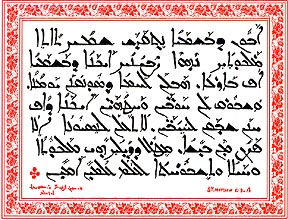
Father Elias Tabban, parish priest of Jaffa of Nazareth, Israel, visited with us in October 2013. Father prays the Our Father, the Lord’s Prayer, in Aramaic, the language in which Jesus prayed and taught his disciples to pray.

“Lord, teach us to pray.”

Lord's prayer in Aramaic

where is your Galilee?

21 Apr

Pope Francis Galilee

Pope Francis Easter Vigil Homily

April 19, 2014

The Gospel of the resurrection of Jesus Christ begins with the journey of the women to the tomb at dawn on the day after the Sabbath. They go to the tomb to honor the body of the Lord, but they find it open and empty.

A mighty angel says to them: “Do not be afraid!” (Mt 28:5) and orders them to go and tell the disciples: “He has been raised from the dead, and indeed he is going ahead of you to Galilee” (v. 7). The women quickly depart and on the way Jesus himself meets them and says: “Do not fear; go and tell my brothers to go to Galilee; there they will see me” (v. 10).

After the death of the Master, the disciples had scattered; their faith had been utterly shaken, everything seemed over, all their certainties had crumbled and their hopes had died. But now that message of the women, incredible as it was, came to them like a ray of light in the darkness.

The news spread: Jesus is risen as he said. And then there was his command to go to Galilee; the women had heard it twice, first from the angel and then from Jesus himself: “Let them go to Galilee; there they will see me”.

Galilee is the place where they were first called, where everything began! To return there, to return to the place where they were originally called. Jesus had walked along the shores of the lake as the fishermen were casting their nets. He had called them, and they left everything and followed him (cf. Mt 4:18-22).

To return to Galilee means to re-read everything on the basis of the cross and its victory. To re-read everything – Jesus’ preaching, his miracles, the new community, the excitement and the defections, even the betrayal – to re-read everything starting from the end, which is a new beginning, from this supreme act of love.

For each of us, too, there is a “Galilee” at the origin of our journey with Jesus. “To go to Galilee” means something beautiful, it means rediscovering our baptism as a living fountainhead, drawing new energy from the sources of our faith and our Christian experience.

To return to Galilee means above all to return to that blazing light with which God’s grace touched me at the start of the journey. From that flame I can light a fire for today and every day, and bring heat and light to my brothers and sisters. That flame ignites a humble joy, a joy which sorrow and distress cannot dismay, a good, gentle joy.

In the life of every Christian, after baptism there is also a more existential “Galilee”: the experience of a personal encounter with Jesus Christ who called me to follow him and to share in his mission. In this sense, returning to Galilee means treasuring in my heart the living memory of that call, when Jesus passed my way, gazed at me with mercy and asked me to follow him. It means reviving the memory of that moment when his eyes met mine, the moment when he made me realize that he loved me.

Today, tonight, each of us can ask: What is my Galilee? Where is my Galilee? Do I remember it? Have I forgotten it? Have I gone off on roads and paths which made me forget it? Lord, help me: tell me what my Galilee is; for you know that I want to return there to encounter you and to let myself be embraced by your mercy.

The Gospel of Easter is very clear: we need to go back there, to see Jesus risen, and to become witnesses of his resurrection. This is not to go back in time; it is not a kind of nostalgia. It is returning to our first love, in order to receive the fire which Jesus has kindled in the world and to bring that fire to all people, to the very ends of the earth.

“Galilee of the Gentiles” (Mt 4:15; Is 8:23)! Horizon of the Risen Lord, horizon of the Church; intense desire of encounter…. Let us be on our way!

returning to our first love

21 Apr

“In the Cross we see the monstrosity of man, when we allow ourselves to be guided by evil; but we also see the immensity of God’s mercy who does not treat us according to our sins, but according to His mercy.” 

+ + + +


+ + + +

“The message which Christians bring to the world is this: Jesus, Love incarnate, died on the cross for our sins, but God the Father raised him and made him the Lord of life and death. In Jesus, love has triumphed over hatred, mercy over sinfulness, goodness over evil, truth over falsehood, life over death.”

+ + + +


stay at the table

21 Apr

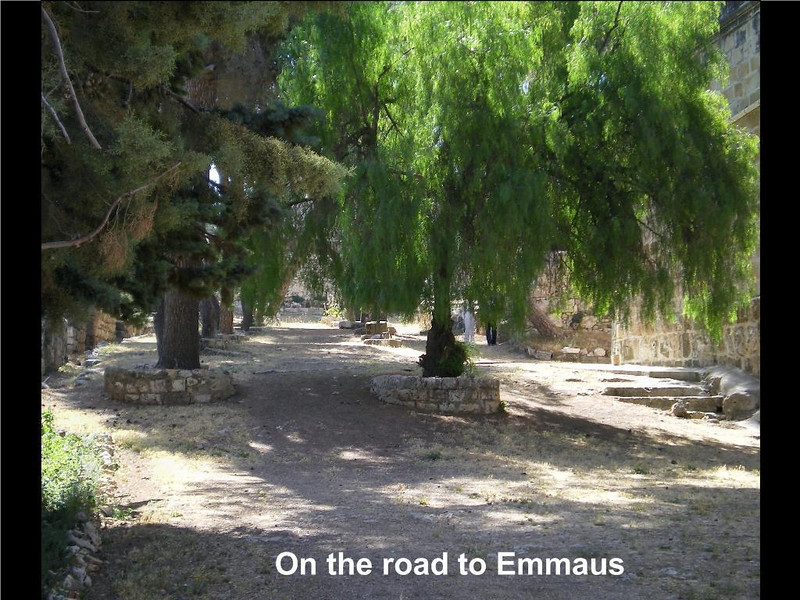
Road to Emmaus 01

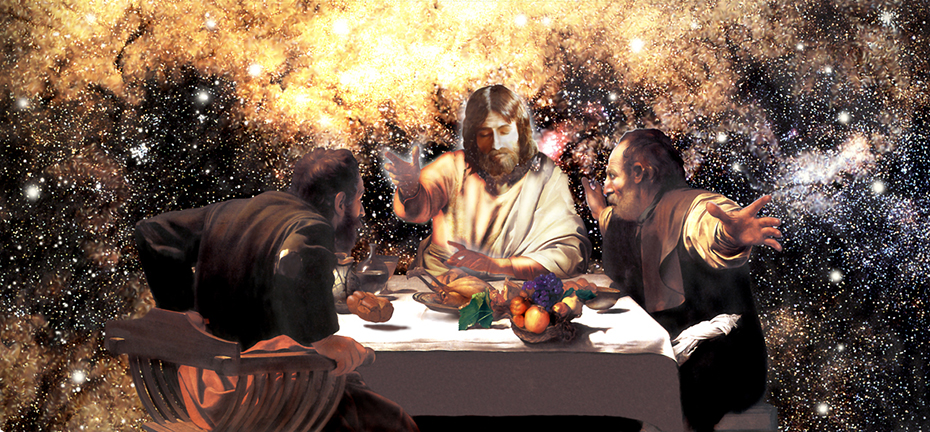
even on this day after Easter Sunday, there  can be dashed hopes. We wonder what God has in mind sometimes, if indeed he is thinking about us at all. We discuss the distress of our days and argue about how today can be fixed and about what tomorrow might be like, if either we or God don’t do something real fast. Among us believers there is conversation today, just as …

Road to Emmaus 02

back then on the very day the disciples received word that others had said that the tomb of Jesus was empty. 

As then, so now, in the midst of disappointments and wonderings, Jesus joins us “on the way” as we debate. Little by little, if we stay with the conversation, he turns our debate into a question and answer session, reminding us about what the plan has been all along and showing us that there is evidence even on this day, incomplete as it is, that the plan is moving ahead and is on schedule. 

Showing himself to us in the breaking of the bread, he simply asks us to “stay at the table.”

Road to Emmaus 03