When I was a kid, in the days before cell phones, we got on our feet or on our bikes, and went in person to the home of our friends. Instead of ringing the doorbell, we stood outside and sang, without musical accompaniment, using just two notes, the higher note only for the name of the person and for the last word before the question mark, “O Steve, can you come out and play?” I do not know why we did it that way. We just did. And it worked. If the kid didn’t come out himself, his mother appeared at the door, and told us why he was not coming out to play.
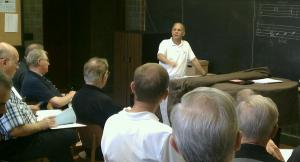
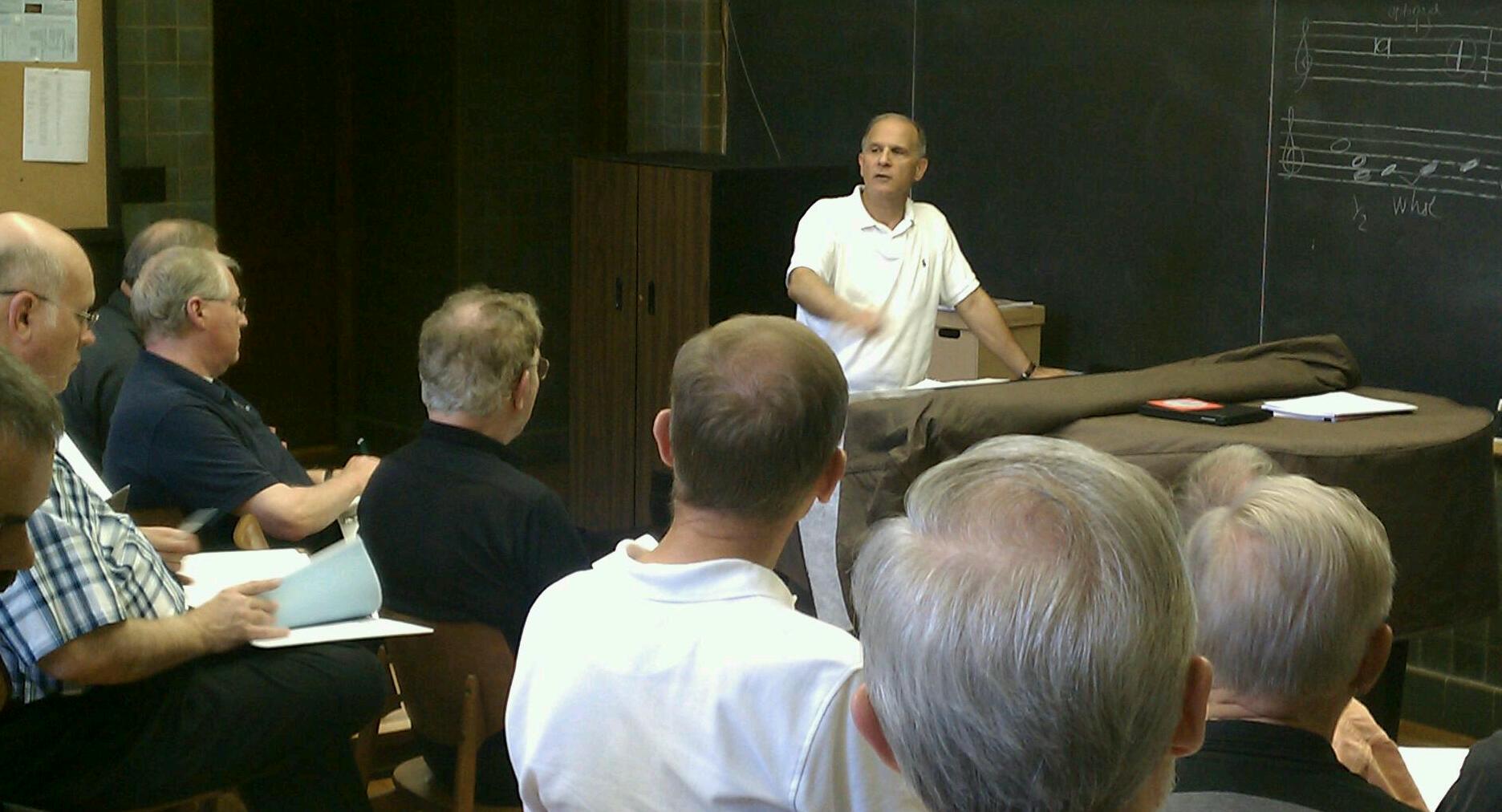
That distraction came to me when I was at a chant workshop for priests. We were learning the chants of the Roman Missal. When we begin to use the new English translation of the Mass on the First Sunday of Advent, we will be singing more than we have been. The new Missal, we are told, will have music printed all through the text. The music will not be tucked away in the back of the book in an appendix, as if singing were an afterthought or is an option. It is the Church’s way of saying, “Sing.” So, we priests have begun to learn how to chant the prayers and the dialogues of the Mass.
Chanting is singing a single line of music, that is, without any harmony line being sung at the same time by someone else, just one single line of music. It is usually just two, three or four notes repeated in rather predictable patterns. It is usually without any musical accompaniment. All that is heard is the human voice. It is simple and straightforward, not complex. Yet when a dialogue or a prayer is chanted, not just spoken, the words are raised to a new level and reach a deeper place in us. Listen to this prayer from Epiphany Sunday as it is chanted: Prayer over the Offerings.
Here at St. Andrew, come November 27, we will begin slowly and gently, for the sake of the priests and the people. We will begin with the dialogues, those places in the Mass when the priest and the people are responding back and forth. Maybe the priest will also chant the prayers at the beginning and at the end of Mass, the ones he prays at his chair by himself, as the server holds “the big red book” (the Missal) for him.
So, soon we will have not only some new words, but also more singing, oops, I mean, chanting. It will be simple. And it will help us raise our minds and hearts to God, as we fall in love with the Mass all over again.

Tags: Chant, Roman Missal, Roman Missal Chants, Singing the Mass, St. Andrew Catholic Church (Milford, Ohio)



 With Open Doors