Archive | Separation Wall RSS feed for this section

respectfully, Mr. President

21 Mar

obama israel visit 2013 statement

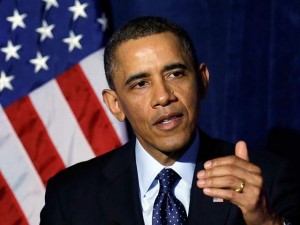
Below is the letter from the Justice and Peace Commission of the Assembly Catholic Ordinaries of the Holy Land to the US President Obama for his first visit in Israel, West Bank and Jordan. Barack Obama arrived in Israel on Wednesday, his first visit as US president. He will visit Bethlehem tomorrow, Friday, March 22, 2013.

The President of the United States

The White House
1600 Pennsylvania Avenue, N.W.
Washington, DC 20500
USA

Dear Mr. President,

We, the heads of the Catholic/Christian Churches in Jerusalem, welcome you wholeheartedly on your forthcoming visit to Israel and Palestine. On this occasion we would like to draw your attention to some major problems that deeply affect the Christian presence in these countries.

In this year, the Palestinian people are living for 46 years under Israeli military occupation. The plight of the Palestinian Christians is the same as that of the Palestinian People as a whole, and as a consequence everything that affects the Palestinian people also affects the Christians.

In the occupied Palestinian territories, among the numerous violations of international law by the Israeli authorities we mention only a few: illegal Israeli settlements, a permit regime which restricts severely access to the Holy places for Muslims and Christians alike, expropriation of privately owned Palestinian land for settlement expansion and the construction of the separation barrier (like in the present case of the valley Cremisan), etc.

Statelessness, endless family unification procedures and the rejection of the registration of children as well as the limited possibilities to expand due to few granted building permits in East Jerusalem violate basic human rights of the Palestinians and force them into displacement, migration and exile.

The majority of the local Christian population being part of the Arab population in Israel, they are as such subjected to an ongoing, hidden policy of discrimination and are treated as second class citizens in the fields of education, job opportunities, property ownership, local municipal services, etc.

Though the Christian Palestinian presence plays an important role in this Holy Land: it gives a large contribution in the fields of education, healthcare and social services, their absence will have catastrophic consequences especially with the rise of the fundamentalists on both sides. Thus every effort should be made to preserve the Christian presence in the Holy Land, and to have it flourish in the future so that hope is not lost. The oppressive and discriminatory policies by the Israeli government constitute a violation of the protection of a religious minority which is specifically underlined by international law.

We urge you, in your position as President of the United States of America, to require from the State of Israel to respect international law and to stop all illegal policies targeting the Palestinian population of the Holy Land; this would be the best way of contributing to preserve and protect the Christian presence in the Holy Land.

Most Respectfully,

Justice and Peace Commission, Assembly Catholic Ordinaries of the Holy Land

 + + + + +

As previously posted, I sent an email to President Obama and signed an online petition against the building of the Wall in the Cremisan Valley.

 

a plan defied

17 Feb

A court in Israel has heard the final arguments on the construction of a separation wall in the Cremisan valley of Beit Jala (West Bank).

I found a link to this video, entitled “Israel plan to wall off West Bank land defied,” on the Facebook page of the Society of St. Yves Catholic Center for Human Rights, which is representing the landowners and the religious community of sisters of the Cremisan valley.

In the video at 1:12 and 1:33 you saw Father Ibrahim, the pastor of the Catholic parish of Beit Jala. Father Ibrahim will be my guest at my parish in Milford in September-October, insha’Allah (God willing/hopefully).

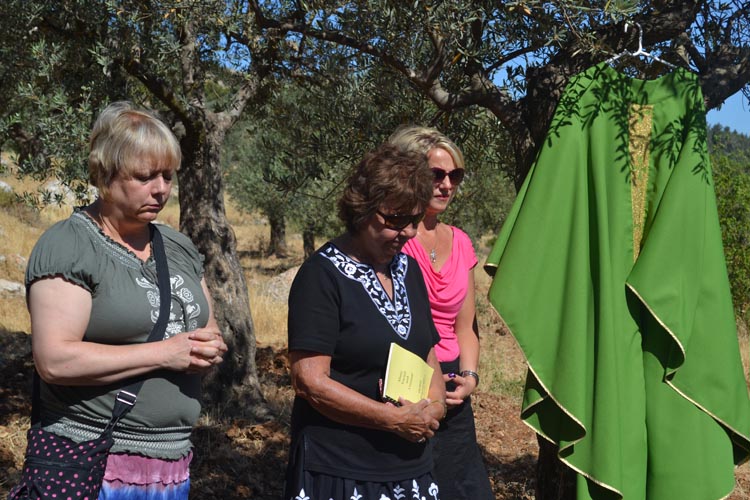
At 1:14 you saw the chalice that a group of pilgrim-teachers left with Father Ibrahim as a gift from us to his parish. We used  the chalice when we celebrated Mass in Cremisan valley. Father Ibrahim has used it every Friday since then, as he has celebated Mass in the same olive grove.

ended with no decision by the court

15 Feb

St. Yves Society bannerOn Tuesday, 12th of February 2013, the final hearing for the case of the Cremisan Valley against the Separation Wall was held in front of the Special Appeals Committee in the Magistrate Court in Tel Aviv.

Our friend, Father Ibrahim Shomali, the Parish Priest of Beit Jala, was in the crowded courtroom to observe the proceedings. The Catholic auxiliary bishop of Jerusalem was also present.

A summary of the testimony  of both sides is provided by the Society of St. Yves Catholic Center for Human Rights. Obviously, the summary is of a tone that favors the case as presented by the side opposing the building of the wall.

The session ended with no decision by the court. It will be issued after the committee reviews the documents of the case that has gone on for seven years.St. Yves Society hearing photo

8:30 am Milford – and – 3:30 pm Beit Jala

8 Feb

Mass has been celebrated in Cremisan valley every Friday afternoon at 3:30 p.m. in a prayer-protest of a proposed new section of what is called a separation wall by the Palestinians and a security fence by the Israelis. Whether it is for separation or security, it is definitely a wall, and not a fence, in this section of the structure that divides Beit Jala and Jerusalem.

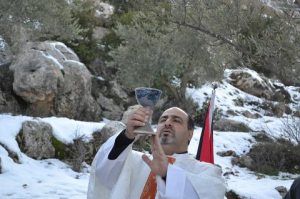
Earlier in January Father Ibrahim Shomali, the pastor of Annunciation Catholic Church in Beit Jala, celebrated the Mass in the cold and snow, after an unusual snowfall a couple days before.fr_ibraheem 2

We see on the altar a blue-green pottery chalice. Father Shomali has used this chalice for the weekly Mass ever since June.

We brought it from Cincinnati as a gift to him and the parish. So, after we used it when we celebrated Mass in that olive grove in Cremisan valley on the edge of the town of Beit Jala in the Bethlehem-area, we left it behind, so that they might remember us in prayer as we remember them in prayer. ibrahin snow bend over 7

Today – Friday, February 8 – will be the last day that Father Shomali will celebrate Mass in that olive grove before the final decision of the Israeli government.  A final decision of the Israeli Court will be handed down on February 12. Will Israel take control of the Cremisan valley? Or will the Cremisan valley remain in the hands of the Palestinians?

PRAY. At 8:30 a.m.(Milford time) pray in solidarity with Father Ibrahim and the people of Beit Jala as they celebrate Mass at 3:30 p.m. (Beit Jala time).

ACT. As urged by the United States Conference of Catholic Bishops, sign the petition that will be taken to Israeli authorities in protest of the proposed building of this section of the wall.

8 days since I added my signature

7 Feb

save the valley in Cremisan: online petition

31 Jan

Cremisan school

The Society of St. Yves is the Catholic Center for Human Rights of the Latin Patriarchate (the Roman Catholic Archdiocese) in the Holy Land. The lawyers of this society have been arguing before the Israeli Supreme Court, at the request of the Latin Patriarchate, asking the Court to stop the Israeli government from building a new section of the security fence (separation wall) through the Cremisan valley at the edge of Beit Jala (Bethlehem).

Crem 97 Cremisan ohio_2012m

Last summer I celebrated Mass in Cremisan valley, and wrote about the place in this previous post: “Not on Friday, but on Tuesday.”

The Society of St. Yves outlines the reasons against the building of this section of the wall, and provides an online petition of support for their position that will be sent to Israeli authorities.  Find out more and sign the petition at “Save the valley in Cremisan: Support bridges, not walls!

When I signed the petition, I wrote this as my reason for signing:

Our friends in Israel could clearly express their desire for reconciliation and security for all who live in the land by a decision NOT to build this section of the fence/wall in the Cremisan valley as it is proposed. Just think of the good public relations message that the Israeli government would put out and the good will that they would spread by making it known that they want the Christians to stay, that they want the people of Beit Jala to have a green space in which to rest and play, that they want the people of the area to have access to water, that they do not want the farmers to lose their livelihood, and that they want the children of the valley to feel safe and secure enough to live and learn as all children deserve – by making it known that they will NOT build that proposed wall/fence through the valley of Cremisan. The Israelis and the Israel government have an opportunity here that they do not often have to put their actions where their words are and their hearts where their minds are. An international audience would hear the message. Not building the wall/fence in the Cremisan Valley along the proposed route is a win-win situation for both the Israelis and the Palestinians, and especially for the children on both sides of that fence/wall that now divides them.

Crem 90 Cremisan jen holy land 964 (205)

not on Friday, but on Tuesday

15 Nov

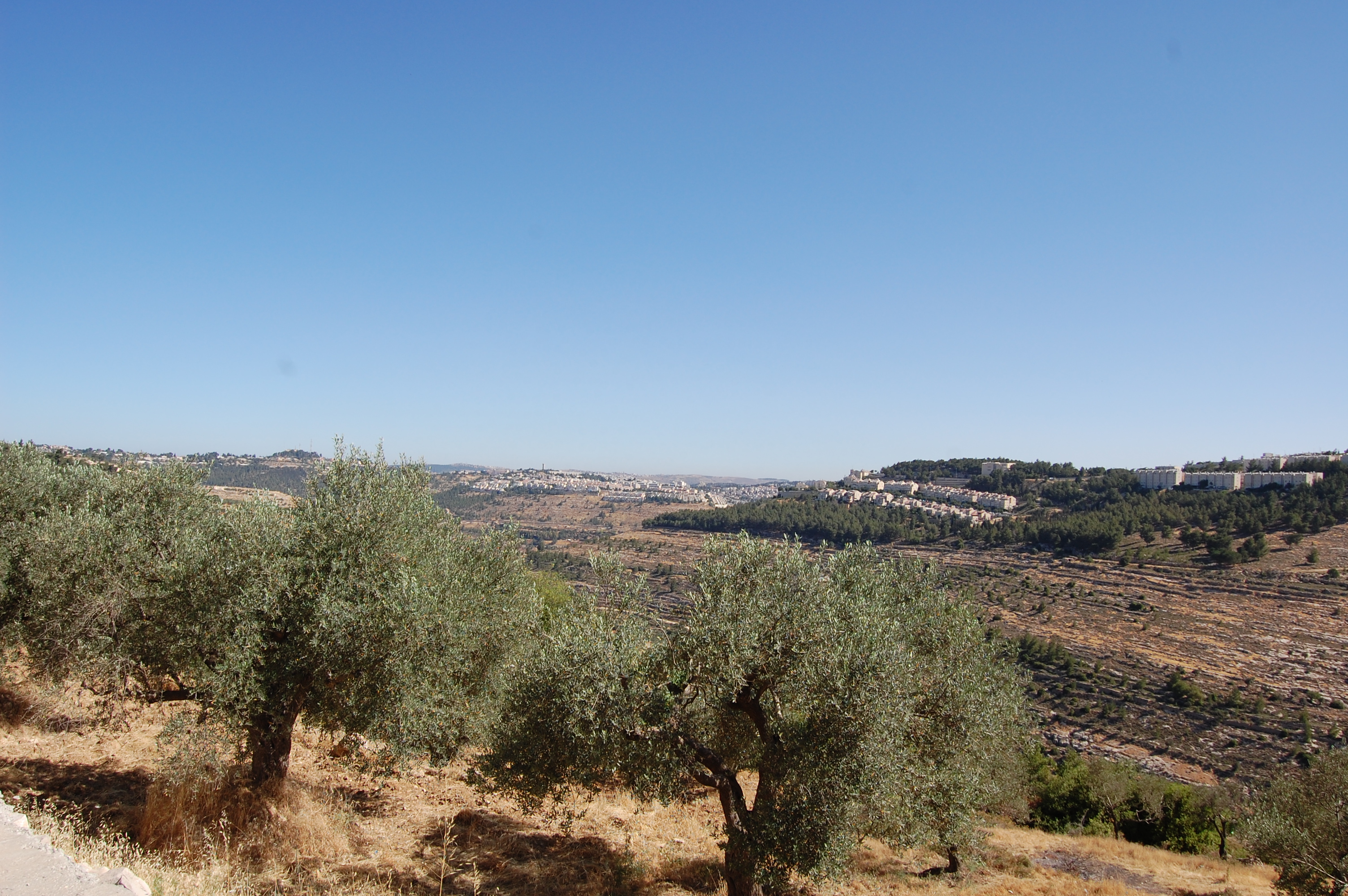
Every Friday afternoon at 3:00 p.m., with obvious connections to the time of suffering that Jesus endured on the Friday that we call Good, Father Ibrahim Shomali, the parish priest of Beit Jala (Bethlehem) celebrates the Holy Sacrifice of the Mass with his people in an olive grove in Cremisan Valley on the outskirts of the town.

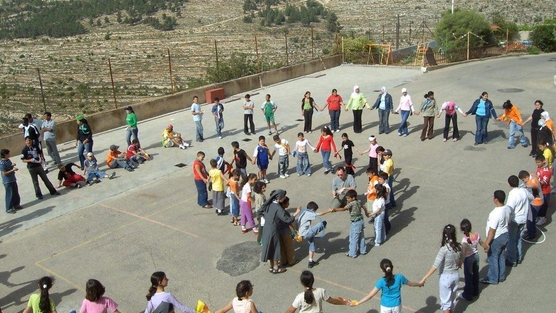
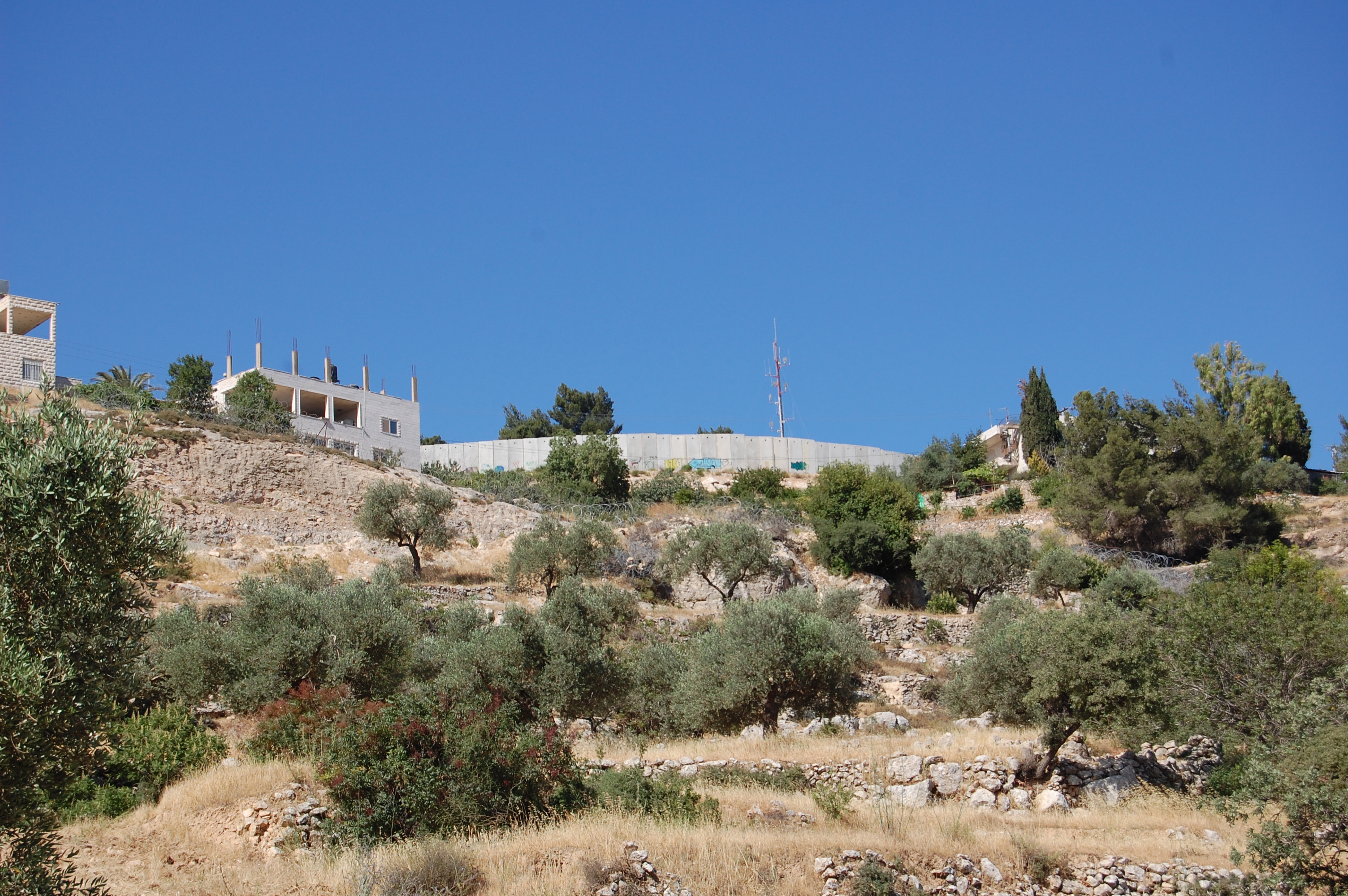
This place is chosen by the parish of Beit Jala for Mass to protest in a prayerful and nonviolent way the proposed path that the Israeli government plans to follow in building another section of the separation wall through this very valley. What the Palestinians (and I) and many Israeli citizens call a separation wall, some proponents prefer to call a security fence, claiming that only 3% of it is actually a wall, and that the rest is a low lying, barbed wire structure. There is no doubt that this section will not be a fence; it will be a wall. And it will separate: 58 families  from their olive groves, 450 children from their school at the convent of the Silesian sisters, and all the people of Beit Jala from the only recreational park, green space that is left for them. And it is hard to imagine how this particular re-routing of the wall to take more land and water for Israel is necessary for security.

The schedule for our pilgrim-teachers from schools of our Archdiocese of Cincinnati did not allow us to join him/them on Friday, so Father Ibrahim arranged for Deacon Suleiman to accompany us to the place for Mass on a Tuesday morning.

When we arrived, we found the ground turned up and over. Someone had obviously plowed the ground.

It was alleged by some of the locals that the Israeli government had done that to make it difficult to pray there. No matter who did it or why it was done, the turned up ground did make it quite complicated to walk and difficult to stand, the slightest shift of our weight causing our feet to slip from underneath us. The situation made us more determined in our prayer. We stood our ground as best as we could.

Deacon Suleiman called us to worship with a reminder that Jesus prayed on the night before his crucifixion in another grove of olive trees: at the base of the Mount of Olives in Jerusalem. These olives trees are a Gethsemane of another kind. Here the agony of the garden continues.

We prayed that the agony of our friends from Beit Jala will be eased.

As we left, some of us picked up stones and olive branches, not knowing whether or not we will ever be able to return with them to this place.